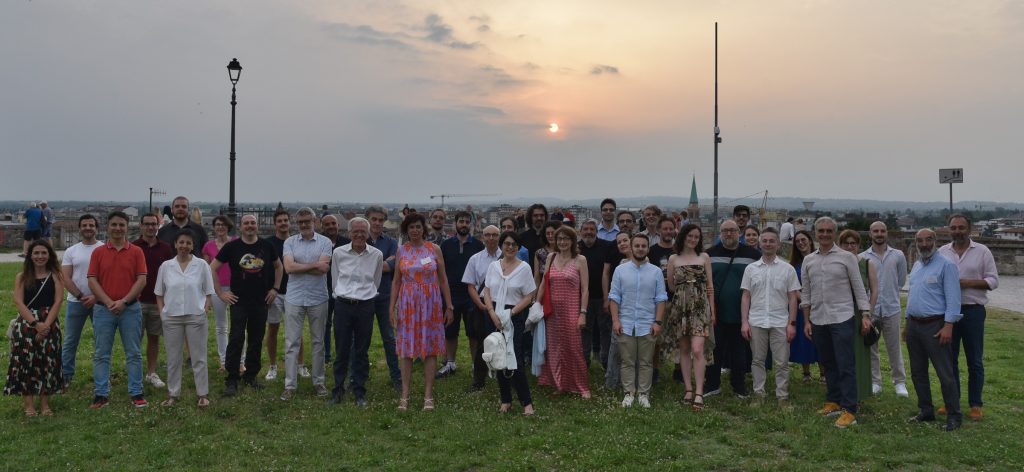
Agostino Dovier is the new Editor in Chief of Theory and Practice of Logic Programming, Cambridge University Press, the main scientific journal of the research area of Logic Programming.

Agostino Dovier is the new Editor in Chief of Theory and Practice of Logic Programming, Cambridge University Press, the main scientific journal of the research area of Logic Programming.
It is a pleasure to announce that the paper entitled
Learning from Answer Sets via Single-Shot Disjunctive ASP Encoding
(by R. Borelli and A. Dovier) based on the Master’s Thesis of Roberto Borelli (Laurea Magistrale in Informatica, Uniud) has been accepted for (oral presentation and proceedings) of AAAI 26, the Fortieth AAAI Conference on Artificial Intelligence (Singapore, January 2026).
Related code and extra material can be found in https://clp.dimi.uniud.it/sw/
ABSTRACT
Deep Learning techniques are nowadays pervasive in AI. However, these approaches suffer from a lack of transparency for justifying their output and for helping users in believing in their decisions. For these reasons alternative approaches to learning deserve to be explored either for developing new tools with autonomous learning capability or for explaining the results of black-box predictors.
Among them an important role is assumed since the Nineties by Inductive Logic Programming and, in particular, recently by the approaches of Learning from Answer Sets (LAS).
Computing inductive solutions for LAS tasks is known to be Σ P/2-hard. In this work, we tackle this problem using a single-shot disjunctive ASP encoding based on the saturation technique originally proposed by Eiter and Gottlob. We prove that, when the background knowledge and hypothesis space form a tight program (a syntactical property) our encoding is linear in the size of the task. This approach contrasts with the state-of-the-art ILASP system, which relies on multiple iterative calls to an ASP solver. As a result, it can be directly evaluated by modern disjunctive ASP solvers, leveraging decades of research and optimization in the ASP community.
We implement our method in a system named LASCO. Experimental results on a diverse set of benchmarks demonstrate that it outperforms all versions of ILASP on many instances and it scales if run on multi-threaded machines.
Per gli interessati, una intervista radiofonica alla prima puntata (2 ottobre) di un programma RAI sull’AI (che fa anche rima)
Results will be presented at International Conference on Logic Programming 2025.

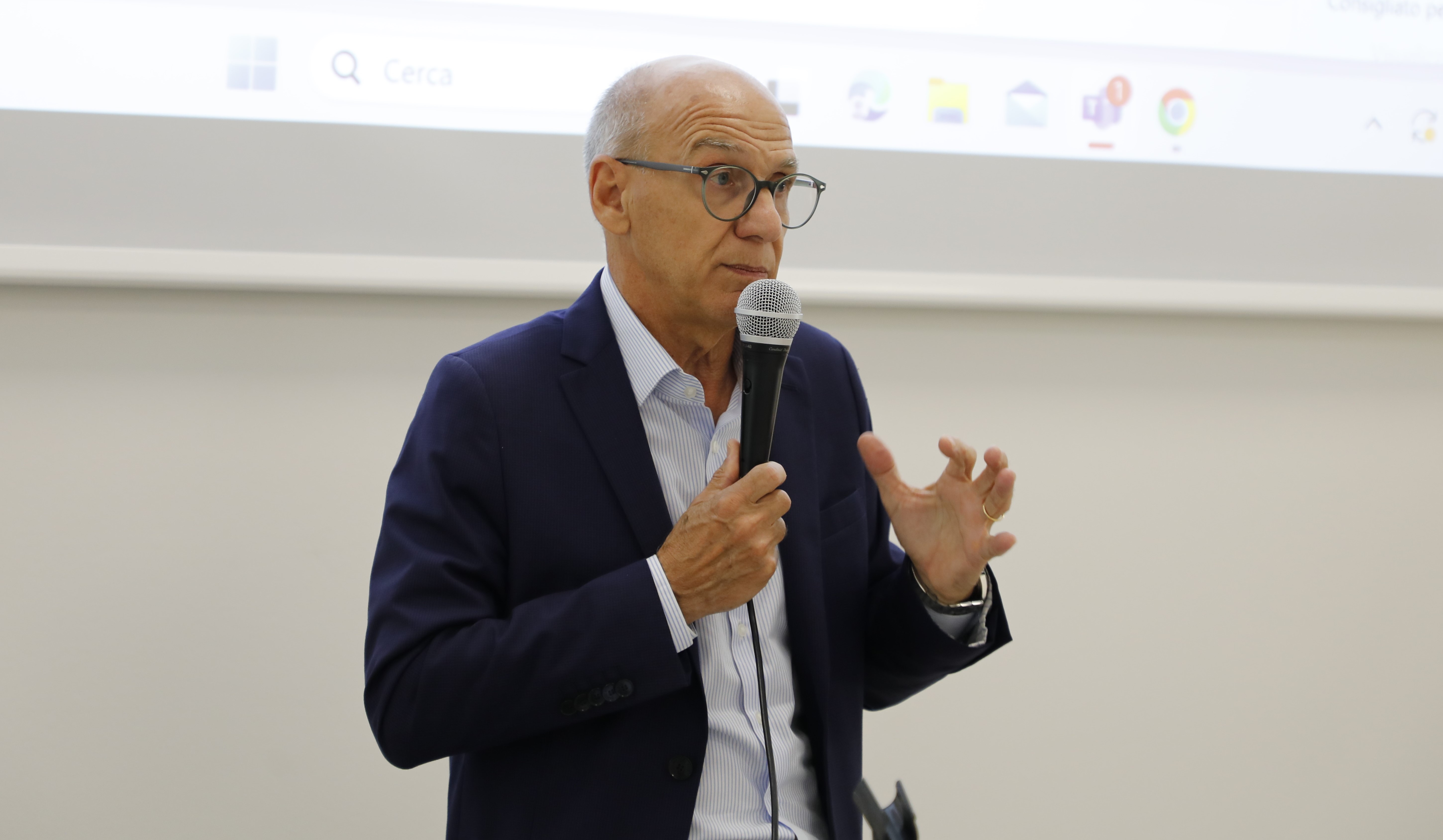
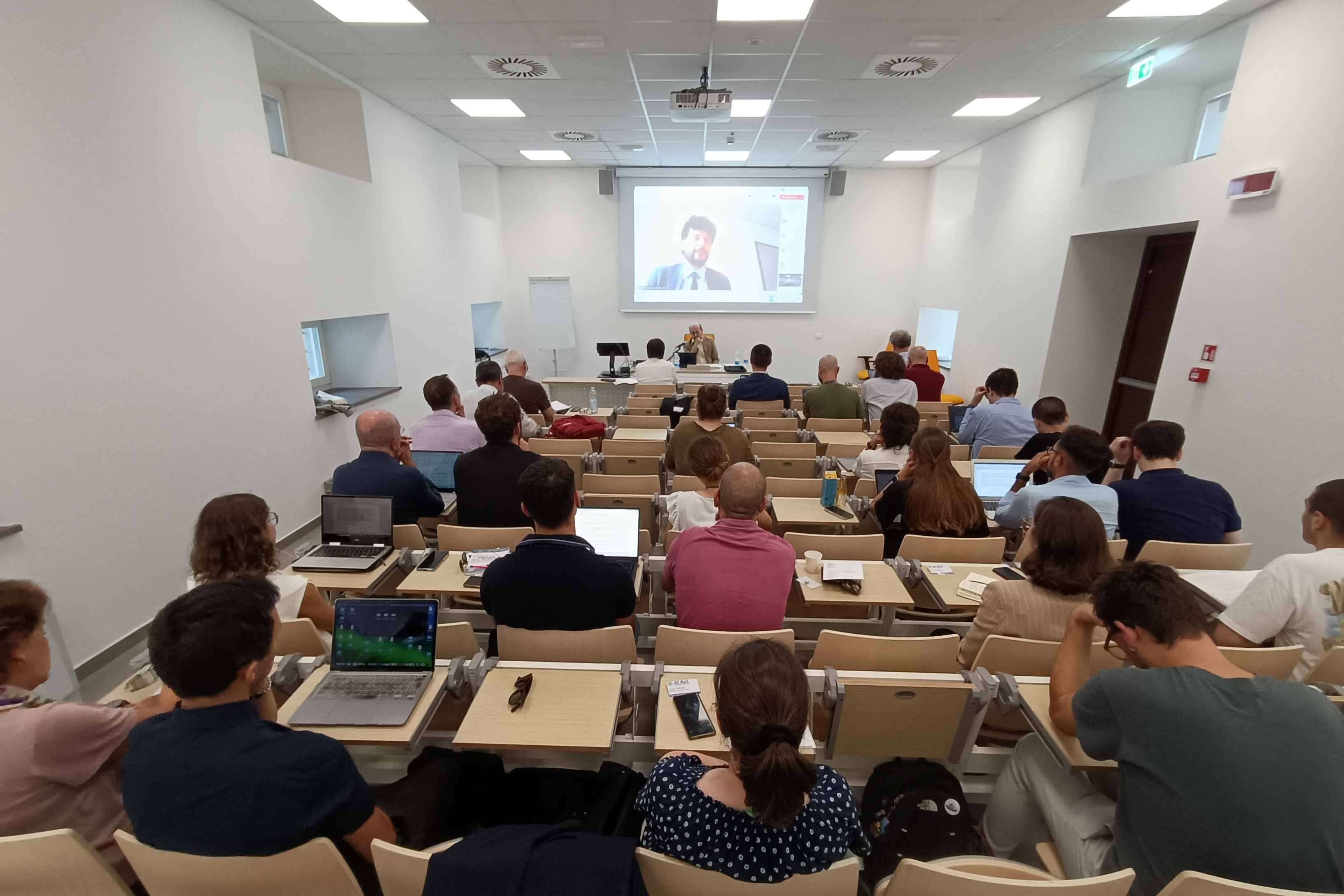
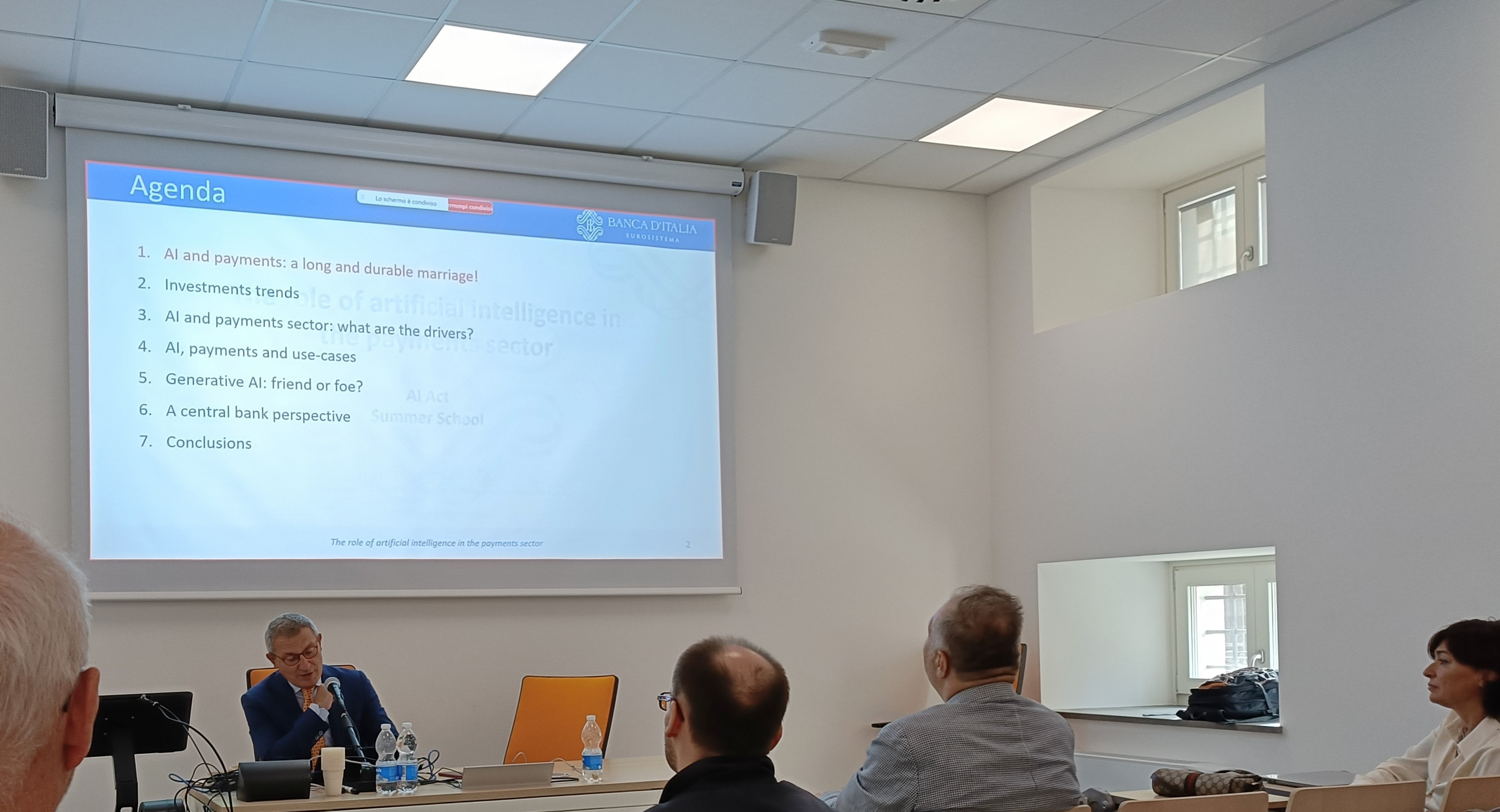
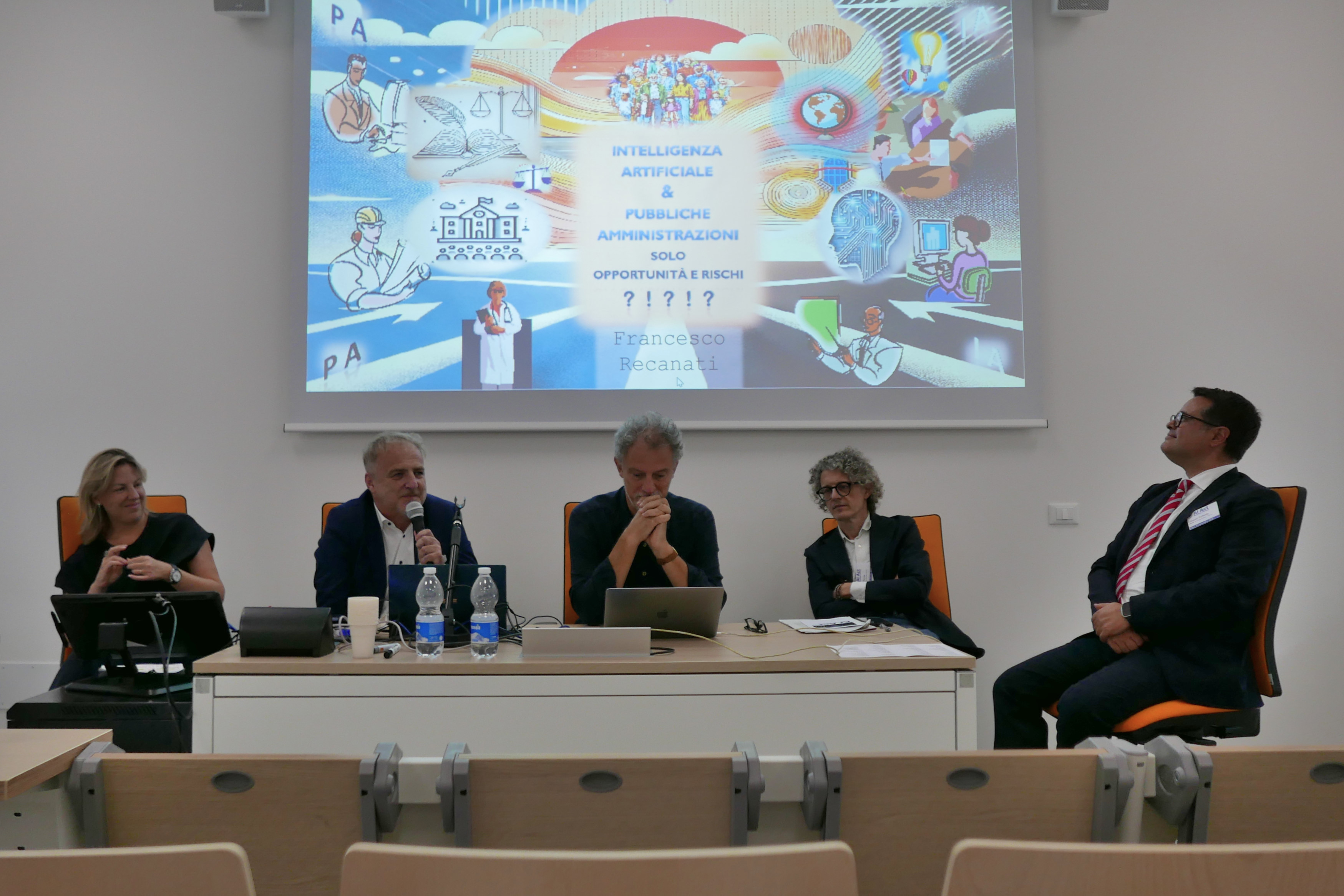
Si è svolta dal 3 al 6 settembre 2024 la scuola di dottorato sull’AI ACT organizzata nell’ambito del Progetto interdipartimentale sull’Intelligenza Artificiale (PSA 2022-25 UniUD) coordinato dal Dipartimento di Scienze matematiche, informatiche e fisiche (DMIF). La Scuola è stata organizzata dal DMIF (Agostino Dovier, Angelo Montanari, Nicola Saccomanno) assieme ai Dipartimenti di Scienze giuridiche (DISG: Elvio Ancona, Federico Costantini, Cecilia Severoni) e di studi umanistici e del patrimonio culturale (DIUM: Andrea Brunello, Luca Grion, Luca Taddio), finanziata dal suddetto progetto del PSA e cofinanziata dai fondi dei docenti organizzatori.

La scuola è stata seguita (gratuitamente) da una quarantina di dottorandi, dottori di ricerca e studiosi che desideravano approfondire il regolamento europeo sull’intelligenza artificiale (AI Act) presentato con un approccio pluriprospettico.
Alle sessioni introduttive, che hanno offerto una panoramica e un inquadramento generale dell’IA e della normativa europea, sono seguite sessioni più specialistiche che hanno affrontato l’argomento dai punti di vista informatico, giuridico, economico e filosofico.
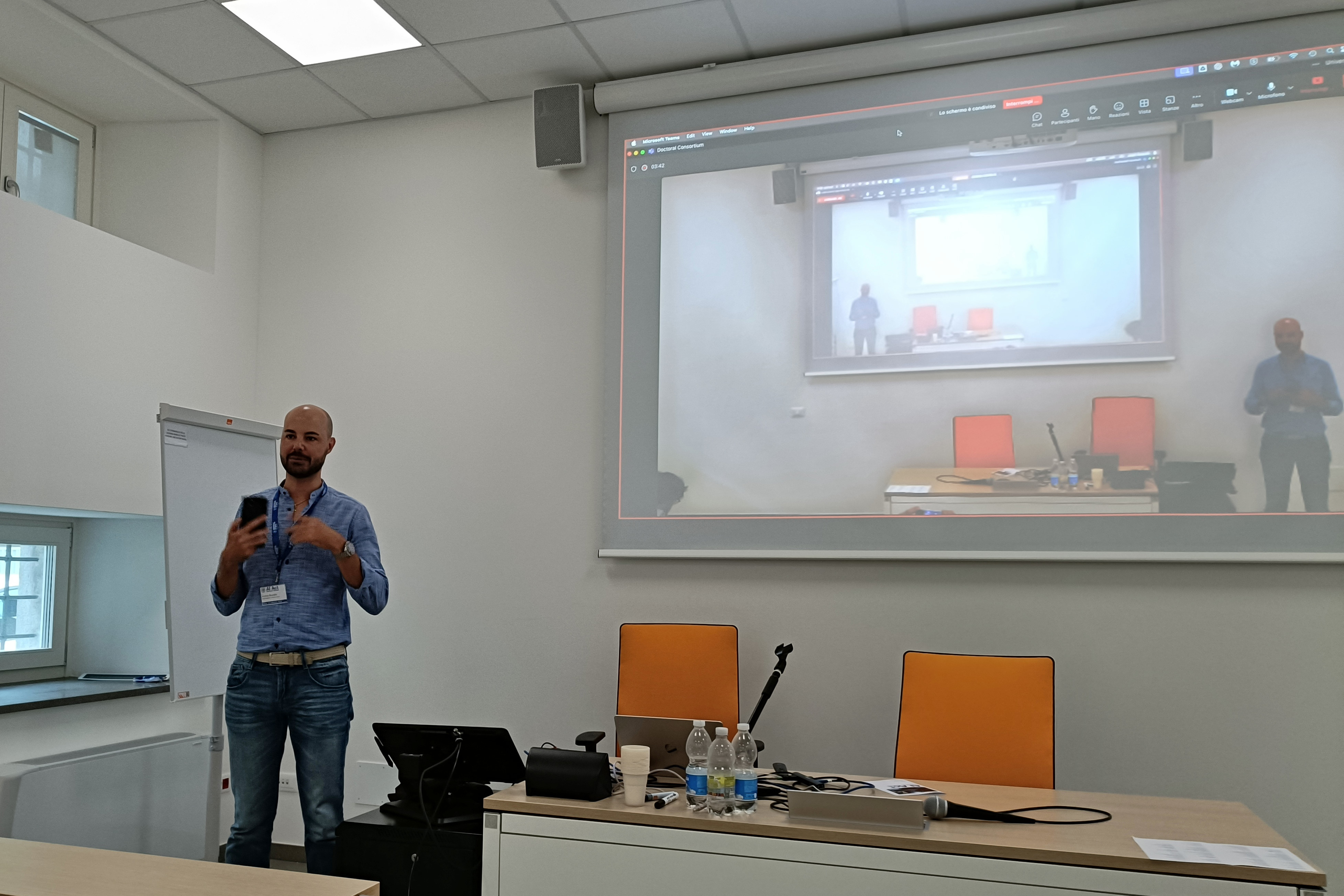
A conclusione dei lavori sono state organizzate una tavola rotonda con rappresentanti del mondo imprenditoriale e della ricerca applicata e un doctoral consortium in cui otto studenti/dottorandi hanno presentato le loro ricerche.
Tra i relatori spiccano i nomi di alcuni tra i massimi esperti dell’argomento a livello nazionale e internazionale:
Per informazioni più dettagliate e altre foto si rimanda al programma consultabile sul sito web all’indirizzo https://ai-act-school.uniud.it/

Another result in our investigation of exploiting CUDA parallelism for constraint programming.
Fabio Tardivo, Agostino Dovier, Andrea Formisano, Laurent Michel, Enrico Pontelli. Constraint Propagation on GPU: A Case Study for the Cumulative Constraint. Constraints (to appear).
Il laboratorio ha ricevuto un cospicuo finanziamento per il Progetto MaPSART, di durata 18 mesi, finanziato a valere sul bando a cascata dello Spoke 2 del Partenariato Esteso “FAIR – Future Artificial Intelligence” (PE00000013) del PNRR, Missione 4, Componente 2, Investimento 1.3. Coordinatore il prof Andrea Formisano.
Abstract
This research project aims to enhance automated reasoning using GPU technology. It focuses on developing efficient parallel logic solvers, like those for Answer Set Programming (ASP), Satisfiability (SAT), Satisfiability Modulo Theory (SMT), and Constraint Satisfaction Problems (CSP). The core objective is to harness the massive parallelism and computational power of GPUs.
A new result in our investigation of exploiting CUDA parallelism for constraint programming.
Fabio Tardivo, Agostino Dovier, Andrea Formisano, Laurent Michel, Enrico Pontelli Constraint propagation on GPU: A case study for the AllDifferent constraint Journal of Logic and Computation, 2023, 33(8), pp. 1804–1831, exad033.
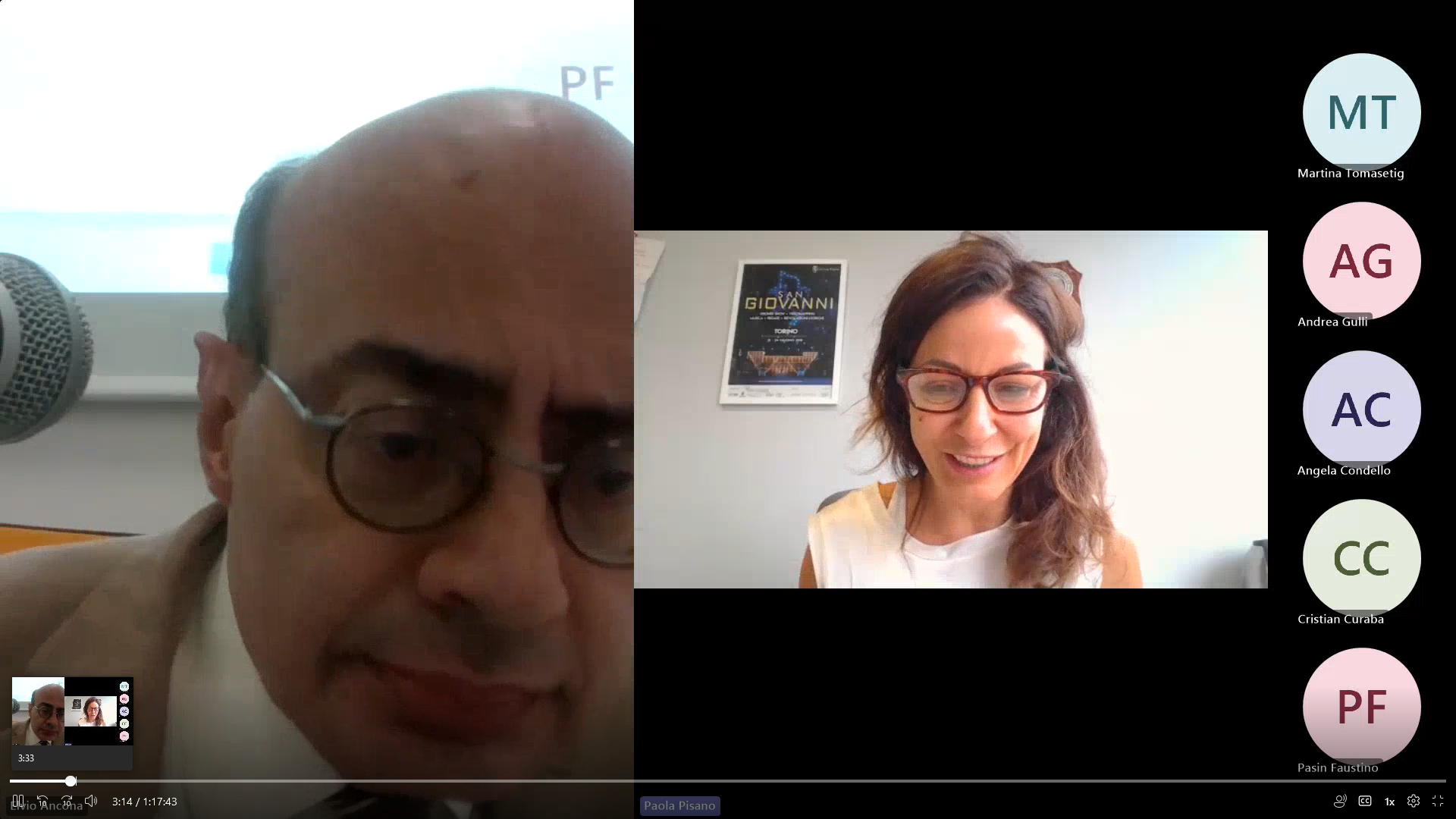
Intervento al programma radiofonico RAI FVG:

Il CLP Lab (in particolare con Agostino Dovier e Andrea Formisano nel ruolo di program chairs) ha organizzato dal 21 al 23 luglio la 38 esima edizione del convegno italiano di logica computazionale. L’evento totalmente in presenza ha avuto un forte riscontro in termini di presenze e di partecipazione attiva. Tutti i dettagli nella home page del convegno: https://www.programmazionelogica.it/associazione/il-convegno/cilc23/